Card Stacking
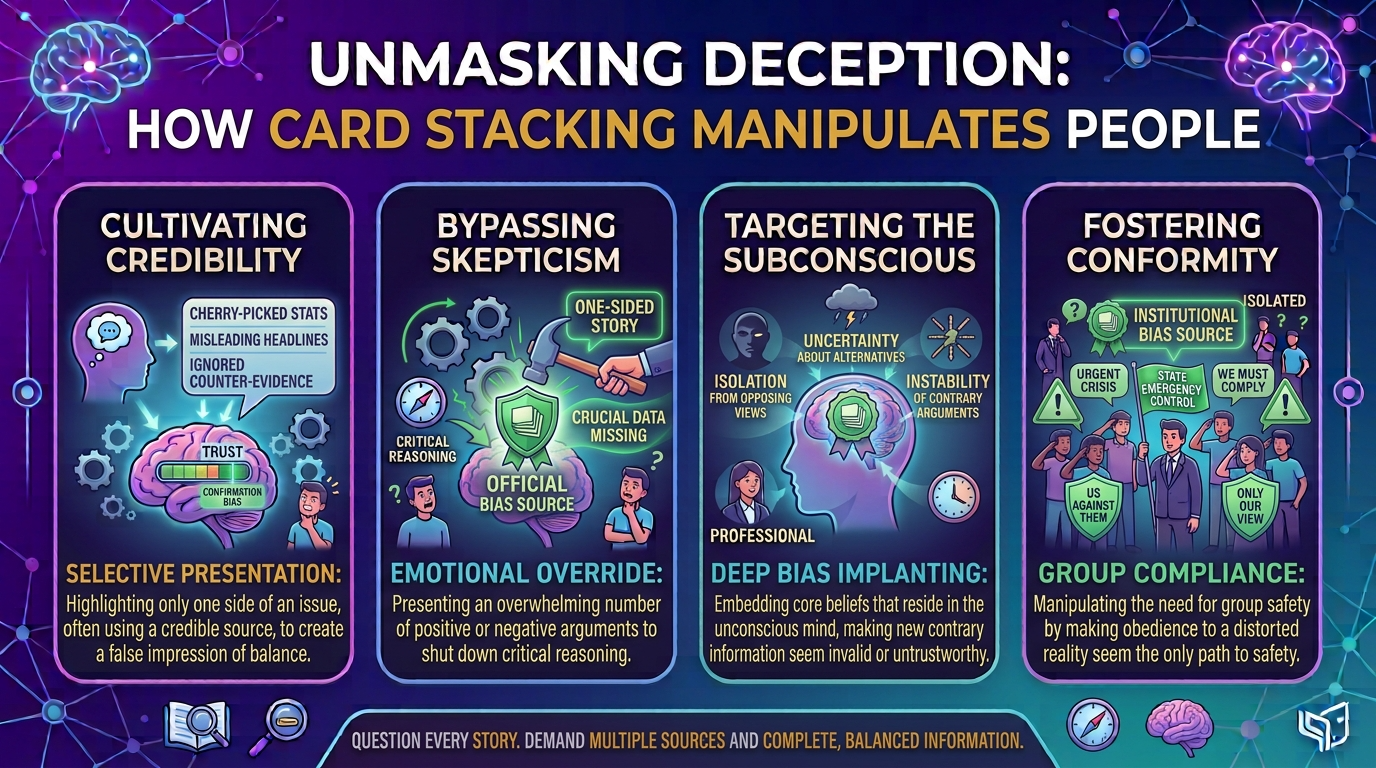
The Effect of Card Stacking
The primary psychological effect is the manipulation of perception to create an overwhelmingly positive or negative image, leading to misinformed decisions based on incomplete facts.
- Misinformation and Skewed Reality: By highlighting only favorable information (or unfavorable when used to attack an opponent), the technique creates a skewed version of reality, making it difficult for the audience to form a balanced judgment.
- Emotional Manipulation: The presented "half-truths" are often crafted to appeal to emotions rather than logic, bypassing critical thinking and encouraging impulsive reactions or support.
- Erosion of Trust: While potentially effective in the short term, if the audience realizes they have been misled, it can lead to a significant erosion of trust in the source (e.g., brand, politician, or media outlet).
- Vulnerability to Further Manipulation: Audiences conditioned to accept one-sided information may become less media literate, making them more susceptible to future propaganda techniques.
Ultimately, the technique is a form of deception that presents a curated, not comprehensive, truth. Consumers and citizens can counter this effect by critically evaluating sources, seeking out independent reviews, and looking for what information might be missing from an argument or presentation
Trump and his Card Stacking
Academic content analyses of Donald Trump's rhetoric—ranging from his political campaigns to posts on platforms like Truth Social—frequently identify card stacking as one of his primary communication tools.
The following are prominent examples of how Trump utilizes card stacking:
Political Endorsements & Overemphasizing Successes<
When endorsing political allies, Trump often employs card stacking by creating an unblemished narrative of the candidate’s record.
- The Method: He compiles a highly selective list of a candidate’s achievements—frequently exaggerated or framed in vague "glittering generalities"—while completely omitting their scandals, legislative failures, or personal controversies.
- Example: In his endorsement of figures like Matt Gaetz, researchers noted that Trump systematically "stacked the cards" by shielding the candidate from high-profile controversies and instead shifting the focus entirely to aggressive, anti-establishment rhetoric and loyalty to the "America First" movement.
"Declassification Theater" and Document Leaks
Political analysts point to the selective release of government documents during his administration as a structural manifestation of card stacking.
- The Method: Sifting through voluminous archives of internal communications, intelligence reports, or emails to pull out isolated, suggestive sentences while keeping the broader context classified.
- Example: Trump and his allies frequently called for the declassification of specific, isolated text messages or administrative memos regarding the Russia investigation. By presenting a handful of selective, out-of-context lines to the public, he argued it proved a vast "Deep State" conspiracy, while suppressing the remaining thousands of pages of context that justified the investigation.
Economic and Stock Market Framing
Throughout his presidency and subsequent campaigns, Trump heavily relied on card-stacked economic reporting.
- The Method: Highlighting record-high daily numbers from the Dow Jones Industrial Average or specific monthly job growth figures as absolute proof of "the greatest economy in history," while ignoring complicating macroeconomic factors.
- Example: He routinely omitted negative indicators that occurred during the same windows—such as skyrocketing national debt, stagnant wage growth for the working class, or manufacturing recessions in the Rust Belt—to present an entirely one-sided picture of economic prosperity.
Creating "Smoke Screens" to Evade Embarrassing Facts
A core element of card stacking identified by the IPA is creating a "smoke screen of clamor" by aggressively introducing a new issue the moment an embarrassing fact is revealed.
- The Method: Rather than answering a direct critique or policy failure, Trump pivots to a completely separate, highly emotional grievance to command the media cycle.
- Example: When facing intense scrutiny over federal management of the COVID-19 pandemic, Trump aggressively shifted public attention by heavily focusing on external scapegoats—such as the World Health Organization, individual state governors, or China—thereby altering the data parameters of the conversation and burying the original policy critique.