Name Calling
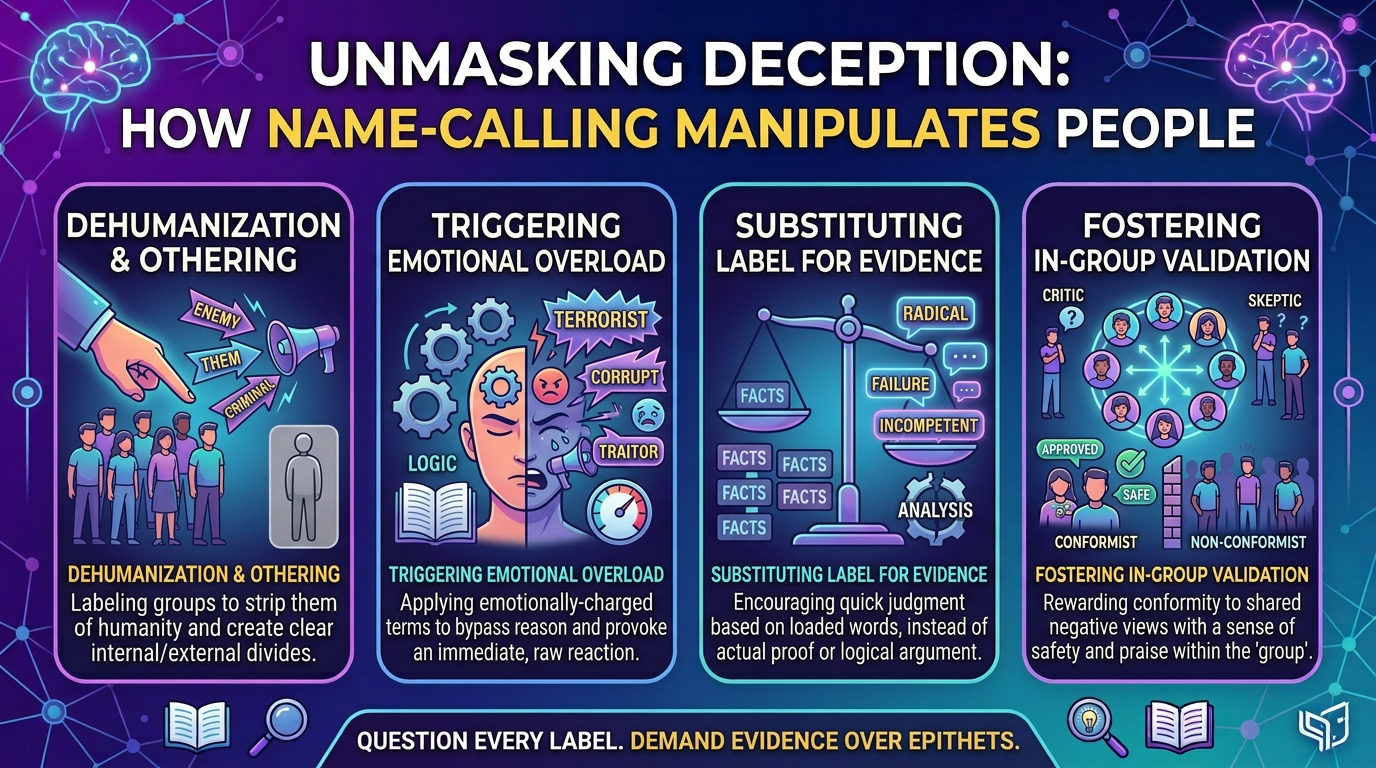
Name-calling has significant negative psychological effects on the public, including increased anxiety and stress, reduced ability for rational thinking, damaged social trust and empathy, and general disengagement from the political process.
Effects on the Public and Society
- Increased Stress and Anxiety: Witnessing constant rudeness and incivility from political leaders is a significant source of stress for many people, which can lead to political anxiety and even clinically significant mental health issues.
- Reduced Rational Thought and Cooperation: Exposure to rudeness and contempt interferes with people's ability to think clearly, solve problems creatively, and work cooperatively as citizens. It diminishes empathy and shared understanding, making compromise difficult.
- Political Disengagement and Apathy: Negative political language often puts people in a negative mood and makes them less likely to vote or participate in political discussions. It can also lead to a general sense of being "worn out" with politics.
- Polarization and Demonization: Name-calling contributes to affective polarization, where people not only disagree on policy but develop a strong, visceral dislike of the "other side," viewing opponents as enemies rather than fellow citizens.
- Derailing Important Discussion: Name-calling acts as a tactic to steer conversations away from substantive policy issues, which can leave people feeling misunderstood and their realities invalidated.
Effects on Individuals
- Damaged Self-Esteem: For the target of name-calling, especially if it is intended to demean or harass, it can lead to low self-esteem, less confidence, anxiety, and a depressed mood.
- Triggering Lived Experiences: Witnessing name-calling can trigger a person's past experiences with bullying or abuse, leading to strong negative emotional reactions.
- Associative Learning: The repetitive use of derisive nicknames can lead voters to form negative emotional associations with the targeted individual without consciously evaluating their actual policies or qualifications.
In essence, political name-calling fosters a climate of fear, defensiveness, and contempt, ultimately undermining the health of public discourse and civic engagement.
Trump's Name Calling Extravaganza
Donald Trump has a long-standing history of using derisive nicknames and name-calling as a central tactic against political opponents, journalists, and critics
This practice, highly documented throughout his campaigns and presidency, spans several categories of public figures:
2024 & Recent Political Opponents
- "Comrade Kamala" / "Kamabla" / "Crazy Kamala": Used to attack Vice President Kamala Harris during the 2024 presidential campaign.
- "Crooked Joe" / "Sleepy Joe" / "Joe Hiden": Assigned to President Joe Biden during the 2020 and 2024 election cycles.
- "Birdbrain": Used against former South Carolina Governor and UN Ambassador Nikki Haley during the 2024 Republican primaries.
- "Ron DeSanctimonious" / "Tiny D": Target nicknames aimed at Florida Governor Ron DeSantis during the 2024 Republican primaries.
2016 Presidential Primaries & Election Opponents
- "Crooked Hillary" / "Crazy Hillary": His most famous and widely repeated moniker, used heavily throughout his 2016 campaign against Hillary Clinton.
- "Lyin' Ted": Used to attack Texas Senator Ted Cruz during the bitter 2016 GOP primary.
- "Little Marco": Implemented to mock Florida Senator Marco Rubio's physical stature during the 2016 primary debates.
- "Low Energy Jeb": A highly effective label used to characterize former Florida Governor Jeb Bush's campaign style in 2016.
- "Crazy Bernie": Aimed at Vermont Senator Bernie Sanders.
Other Prominent Lawmakers
- "Pocahontas" / "Goofus": Mocking monikers directed at Massachusetts Senator Elizabeth Warren regarding her past claims of Native American.
- "Crazy Nancy": Used frequently against former Speaker of the House Nancy Pelosi.
- "Shifty Schiff": Directed at California Representative Adam Schiff, particularly during the first impeachment inquiry.
- "Cryin' Chuck": Aimed at Senate Democratic Leader Chuck Schumer.
- "Sloppy Steve": Assigned to his former White House Chief Strategist Steve Bannon after Bannon cooperated with a critical book about the administration.
Media Figures & Journalists
- "Psycho Joe" and "Dumb as a Rock Mika": Insults leveled via social media at MSNBC Morning Joe co-hosts Joe Scarborough and Mika Brzezinski.
- "Sleepy Eyes": A long-running nickname given to NBC News anchor Chuck Todd.
- "Crazy Megyn": Aimed at journalist Megyn Kelly following her sharp questioning during a 2015 primary debate.
You can see why those Americans that don't support Trump feel the situation is not a political one. It's just frustrating beyond words to think that some Americans support such a classless human being.