Testimonial
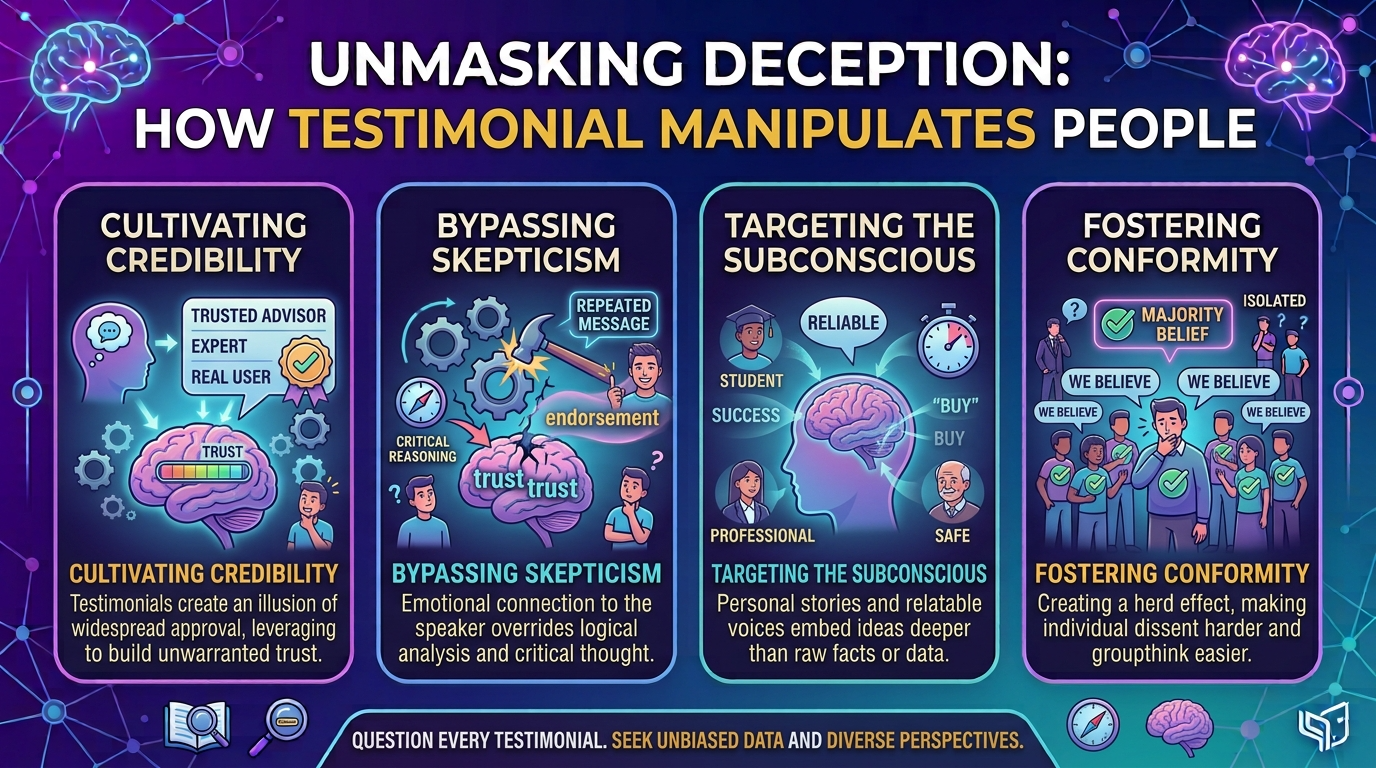
Key negative psychological effects include:
- Increased Anxiety and Stress Politics are a pervasive source of chronic stress for many adults, with a significant percentage reporting anxiety, sleep loss, and fatigue due to political news and campaigns. Testimonials that use apocalyptic language or focus on threats to one's values can elevate these feelings to clinical levels, potentially triggering or exacerbating anxiety disorders.
- Depression and Feelings of Hopelessness Negative political rhetoric, particularly following a candidate's loss, can contribute to symptoms of depression and feelings of hopelessness. This is often linked to the perception that the political system is incapable of solving significant challenges or that a loss represents an existential threat.
- Interpersonal Strain and Damaged Relationships Political disagreements fueled by intense rhetoric can damage friendships and family relationships. The "demonization" of those with opposing views, common in polarized environments, reduces empathy and social trust, making respectful discourse difficult.
- Anger and Hostility Testimonials often aim to elicit anger, directing it towards opponents or a perceived negative state of affairs. While moderate anger can motivate political action, high levels contribute to an emotionally charged atmosphere, increased irritability, and even feelings of hate toward those with different political stances.
- Cynicism and Distrust Constant exposure to negative campaigning, including attack ads and character assassinations, can increase distrust and cynicism in politicians and the democratic process itself. This can lead to a perception that all politicians are untruthful or immoral.
- Psychological Distress and Physical Symptoms The chronic stress and negative emotions can manifest as physical symptoms, including headaches, stomachaches, increased heart rate, and substance use.
- Voter Demotivation/Abstention While some may be motivated to act by fear or anger, others may be so overwhelmed by the negativity and anxiety that they disengage from the political process entirely, avoiding information consumption and even abstaining from voting.
These effects are particularly pronounced among the politically engaged, those with pre-existing mental health conditions, and marginalized groups who may feel directly targeted by certain types of rhetoric.
Trump and the "Testimonial" propaganda technique
Donald Trump frequently utilizes the "Testimonial" propaganda technique—a method where a respected, famous, or seemingly authoritative person (or conversely, an ordinary citizen framed as a credible witness) is used to validate a message and reduce public scrutiny of the underlying evidence.
By pulling endorsements from media figures, political allies, or highly specific "ordinary citizens," his campaigns and communications construct a narrative of broad validation.
Political & Institutional Testimonials via Social Media
On platforms like Truth Social and formerly Twitter, Trump relies heavily on sharing praises and quotes from political allies, foreign leaders, and conservative commentators to validate his actions. A primary example of this is his frequent highlighting of Fox News hosts or conservative commentators. By clipping and posting their positive reviews of his presidency or legal battles, he uses their media authority as a testimonial to prove to his followers that his platform is correct and that alternative media is "fake".
Micro-Targeted "Ordinary Citizen" Testimonials
In his election campaigns, Trump’s digital strategy team has heavily utilized the voices of ordinary citizens to build credibility, often leveraging a hybrid of the "Testimonial" and "Plain Folks" techniques.
- The 2020 Facebook Ad Campaigns: The Trump campaign ran highly localized Facebook ads featuring a supposed Pennsylvania Democrat named "Cecilia" who supported his border wall. Investigations by media outlets like Mother Jones later revealed that while the text was framed as an "Actual Testimonial," the visuals used were completely fabricated using stock footage of actors micro-targeted to different demographics (e.g., changing her appearance based on whether a man or a woman was viewing the ad).
- Targeted Industry Ads: During the 2020 election, his campaign released widespread television advertisements featuring specific workers—such as a Pennsylvania fracking technician named "Jen" and a couple named "Janelle and Kelvin"—vouching for how Trump's economic policies directly saved their livelihoods while warning against his opponents.
Taxpayer-Funded White House Testimonials
During his presidency, Trump occasionally used official government briefings to broadcast produced testimonials.
- The April 2020 Pandemic Video: During a live, televised White House coronavirus press briefing, Trump paused the conference to play a taxpayer-funded video highlight reel. The video featured stitched-together news clips, soundbites from governors praising his rapid administration response, and audio of journalists validating his early travel restrictions. Media critics noted this acted as a produced testimonial video explicitly designed to shield his administration from growing criticism regarding pandemic unpreparedness.
Selective Media Snipping and Re-contextualization
A more deceptive form of testimonial used by the Trump campaign involves selective video snipping. As documented by fact-checkers, his campaign advertisements have historically taken out-of-context quotes from political opponents or neutral public figures, editing them to make it sound as though those individuals were inadvertently complimenting Trump or validating his claims. By manipulating these soundbites, the campaign manufactures an authoritative "testimonial" from an unlikely source to confuse voters.