Anti-Character of a US President
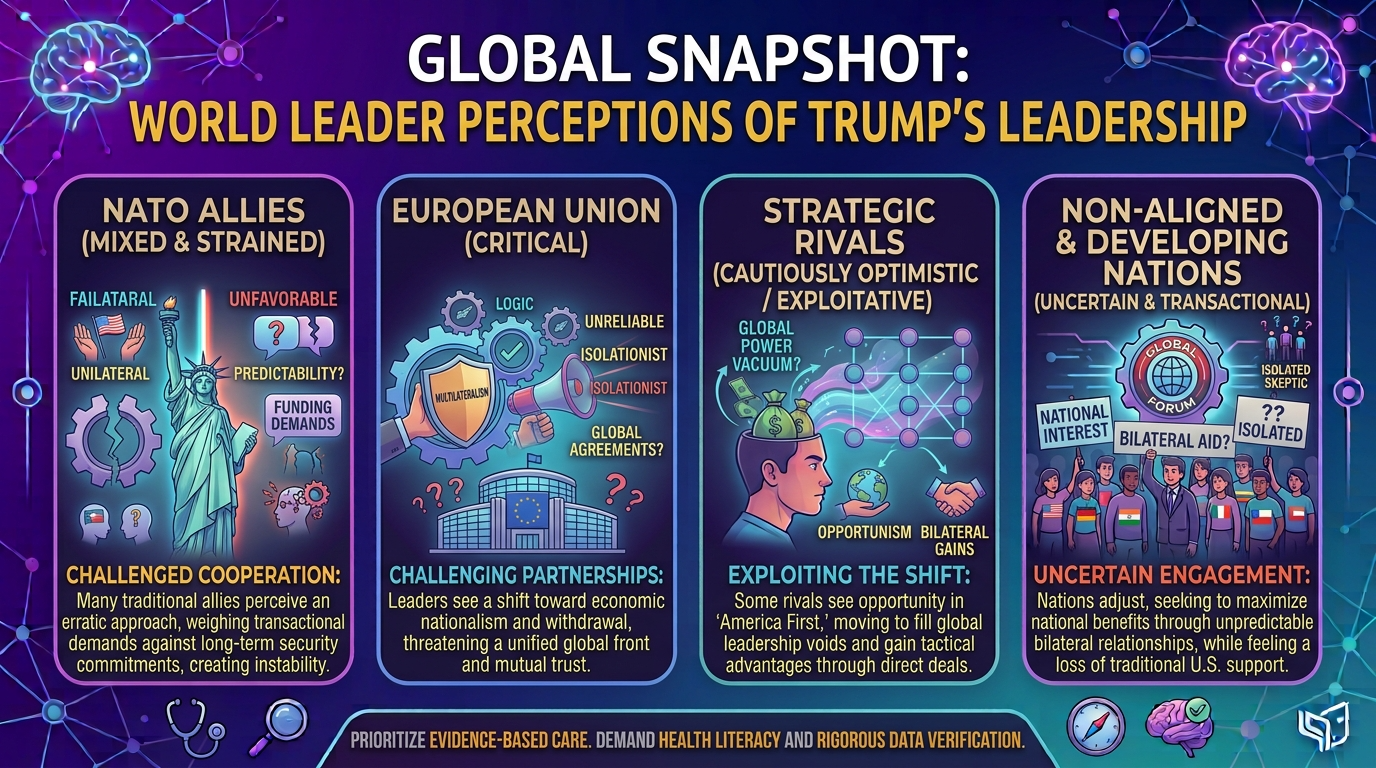
Donald Trump are largely negative, with widespread drops in public confidence internationally following his return to office for a second term. Data from a comprehensive international survey of 36 countries conducted by the Pew Research Center reveals that a global median of 76% of adults express no confidence in Trump’s leadership regarding world affairs, while only 23% maintain confidence.
Key Drivers of Global Perception
The prevailing international skepticism toward Trump stems from specific pillars of his foreign policy and diplomatic approach:
- Transactional Diplomacy: Global leaders and political analysts frequently note Trump’s hyper-transactional approach to international relations. This style treats long-standing geopolitical alliances as business arrangements rather than shared ideological partnerships.
- Strained Alliances: Traditional U.S. allies—particularly within NATO and the G7—have expressed heightened anxiety. This is driven by Trump's recurring questioning of collective defense pacts and threats to impose steep economic tariffs on allied nations, such as Canada.
- Perceived Unreliability: According to data published by The Conversation, public majorities across multiple surveyed nations increasingly view the U.S. as an "unreliable" partner, citing a belief that the administration does not consider broader global interests in its policy decisions
- Geopolitical Realignment: The retreat from traditional U.S.-led multilateralism has accelerated shifts toward a multipolar world order, prompting regional powers like France to explore independent security alternatives.
Variations by Country and Leader Comparisons
While overall global numbers remain heavily critical, nuances exist across different regions and when compared to other global leaders:
- Comparison to Other Leaders: The Pew Research Center notes that Trump's international confidence rating (23%) trails behind several prominent world figures, including French President Emmanuel Macron and Ukrainian President Volodymyr Zelenskyy. Of the primary leaders surveyed, only Israeli Prime Minister Benjamin Netanyahu registered lower global marks.
- Domestic vs. International Split: The negative trend observed globally mirrors a distinct downturn in his domestic standing. According to tracking data consolidated by The Economist, Trump’s domestic net approval rating sits at -26%, with roughly 35% of Americans approving and 61% disapproving of his performance.
- Perceived Unreliability: According to data published by The Conversation, public majorities across multiple surveyed nations increasingly view the U.S. as an "unreliable" partner, citing a belief that the administration does not consider broader global interests in its policy decisions
- Geopolitical Realignment: The retreat from traditional U.S.-led multilateralism has accelerated shifts toward a multipolar world order, prompting regional powers like France to explore independent security alternatives.