How Does Propaganda Work?
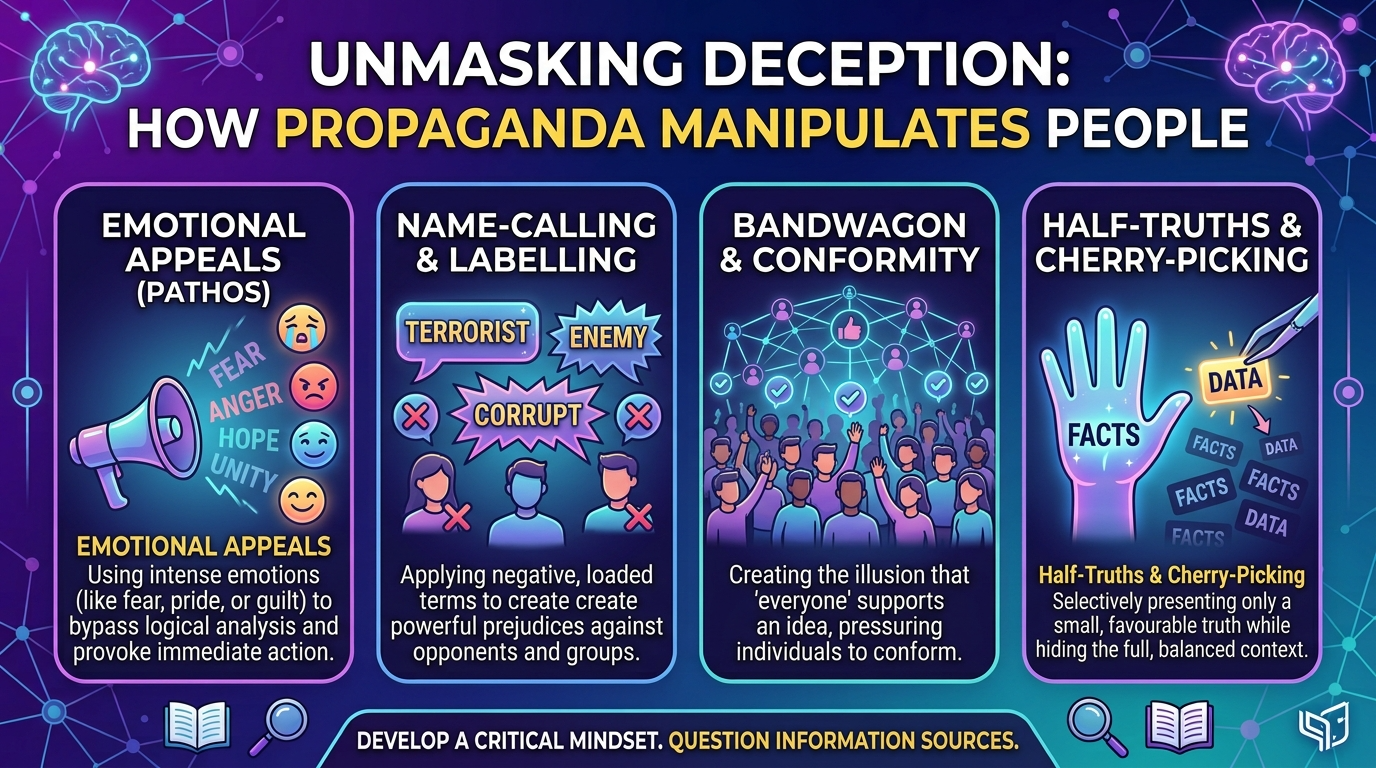
By definition propaganda is the strategic dissemination of information, often biased or misleading, to influence public opinion and promote a specific agenda or cause. It can be found in various forms, from political speeches and advertising to media content and even social media posts. Propaganda aims to shape beliefs, actions, and behaviors by appealing to emotions, using persuasive techniques, and sometimes distorting or misrepresenting facts.
Through the efforts of his propaganda network as mentioned above, Trump was able sway enough of America to become President. Once in office, Trump controlled most of the propaganda. He counts on propaganda for the support of his followers. A couple of Trump quotes: “As long as you keep repeating something, it doesn't matter what you say.” and "I could stand in the middle of Fifth Avenue and shoot somebody, and I wouldn't lose any voters, OK?"
That's the power of propaganda. Trump tells his followers that he lies and his followers vote for him even as a murderer. Hitler had the same effect on Germany.
The psychological effects of Propaganda
Propaganda acts as a form of psychological architecture, systematically altering how individuals process information, evaluate truth, and relate to other social groups. Rather than simply "brainwashing" a passive audience, effective propaganda hooks into deep-seated human vulnerabilities, shifting cognitive frameworks and emotional baselines.
The primary psychological effects of propaganda operate across four distinct dimensions:
Cognitive Distortions and the Erosion of Truth
Propaganda manipulates the mental shortcuts (heuristics) the brain uses to navigate daily life:
- The Illusory Truth Effect: Repeated exposure to a claim increases a person’s likelihood of accepting it as true. The brain mistakes the cognitive ease of familiarity for factual accuracy, bypassing logical skepticism..
- Destruction of Critical Agency: By flooding the information ecosystem with half-truths and contradictory reporting, propaganda can induce cognitive fatigue. This leaves individuals feeling dazed, confused, and ultimately passive, eroding their confidence in their own ability to discern objective reality.
- Exploitation of Confirmation Bias: Modern propaganda is heavily tailored to align with an individual's preexisting values, need to belong, or self-esteem. When confronted with facts that threaten these core beliefs, the brain experiences acute cognitive dissonance and will actively discount reality to protect its identity.
Emotional Hijacking
Propaganda deliberately targets the subcortical regions of the brain—specifically the amygdala—to prioritize survival instincts over rational analysis.
- Manufactured Fear and Outrage: High-anxiety states reduce working memory capacity and cloud analytical processing. By framing scenarios as existential threats, propaganda forces the intellect to follow the dictate of the emotions.
- Chronic Hypervigilance: Prolonged exposure to fear-based messaging increases ambient anxiety and a perceived lack of environmental control, making audiences highly susceptible to authoritarian policies that promise safety.
Altering Neural Processing of Social Groups
One of the most dangerous effects of targeted propaganda is its ability to rewrite social empathy metrics:
- Neural Dehumanization: Neuroscientific insights indicate that aggressive propaganda (such as that used in conflict zones) can actually alter how the brain categorizes out-groups. By comparing target demographics to animals, diseases, or objects, the propaganda shifts neural processing away from human-specific networks and toward object-oriented networks.
- The Eradication of Empathy: Once the brain's networks register an out-group as "less than human," the natural neurological barriers against inflicting harm or feeling collective guilt are structurally diminished.
Behavioral Conformity and Polarization
Propaganda leverages our evolutionary drive for socialization to dictate behavior:
- The Bandwagon Effect: Human beings exhibit striking levels of conformity to authority figures and peers. Propaganda creates "social proof"—the illusion that "everyone else is doing it"—which pressures individuals to fall in line to avoid social isolation or cancellation.
- Severe Polarization: By forcing binary "us versus them" paradigms, it deepens social divides. Individuals become intensely loyal to their in-group, viewing any compromise or alternative perspective not just as a disagreement, but as an existential betrayal.
How we can control Propaganda in the short term
Controlling or mitigating the effects of propaganda requires a coordinated effort across individual behavior, corporate responsibility, and systemic governance. Because over-regulation by governments often risks censoring legitimate free speech or silencing critical independent journalism, experts generally favor building societal resilience over direct censorship.
Here is a breakdown of how individuals, technology companies, and institutions can effectively counter propaganda.
Individual Strategies: Building Personal Defenses
The most immediate way to neutralize propaganda is to change how you consume and share information.
- Cultivate "Lateral Reading": Instead of reading an article from top to bottom and judging it based on how professional the website looks, open new tabs to search what independent sources say about the website or the claim.
- Control Your Digital Footprint: Algorithmic feeds push extreme or emotional content to keep you engaged. Log out of browsers or use privacy-focused tools like the Firefox Browser or search engines like DuckDuckGo that do not track your history.
- Diversify Your "Media Diet": Intentionally consult a fixed list of diverse viewpoints—including high-quality sources you disagree with—to break out of algorithmic echo chambers.
- Pause Before Sharing: Propaganda relies on emotional triggers like anger, fear, or moral superiority. Pausing to fact-check before hitting "retweet" or "share" can stop a false narrative in its tracks.
Technological and Platform Reforms
Social media networks act as the primary distribution channels for modern digital propaganda. Technology firms can adjust their infrastructure to limit its spread:
- Algorithmic Transparency: Platforms should be required to open up their source code or explain publicly how their algorithms prioritize content, allowing researchers to study how propaganda spreads.
- Demoting Provocative Content: Instead of banning users outright—which frequently triggers debates over censorship—platforms can tweak algorithms to reduce the reach of unverified, highly inflammatory posts.
- Robust Reporting Systems: Providing users with clear, frictionless reporting tools to flag state-sponsored coordinated inauthentic behavior (like troll farms) helps platforms identify and dismantle manipulation networks.
Institutional and Educational Interventions
Long-term immunity to manipulation depends heavily on structural support from educational systems and independent bodies.
- Media Literacy in Schools: Educational policy should prioritize digital citizenship. Teaching students how to evaluate source bias, spot logical fallacies, and understand algorithmic manipulation builds generational resilience.
- Supporting Independent Journalism: Free, well-funded, independent press acts as a vital counter-weight to state-sponsored narratives. Public support for local and non-profit newsrooms ensures that verified facts remain accessible.
- Frameworks for Civil Society: Organizations like the United Nations advocate for anti-disinformation strategies that explicitly avoid internet shutdowns or overly broad laws that can be weaponized by authoritarian regimes.